

Everything you need to know about how pendulum clocks work
Introduction to clock mechanics
Understanding how a pendulum clock works allows us to fully appreciate this object that is both practical and decorative. Far more than simple clocks, pendulum timepieces reflect the evolution of human ingenuity in the science of horology. For centuries, people have sought to master time, and pendulum clocks are a perfect example of this pursuit. They mark the passage of hours, minutes, and seconds with a level of precision that, though variable, always showcases exceptional craftsmanship and technical expertise. Inside each clock lies a complex system where every gear and every component plays a vital role.
In this article, we’ll explore the fascinating history of pendulum clocks, how they are maintained, the different types of mechanisms, and the essential parts that make them tick—so you can better understand, care for, and even share your passion for these remarkable creations that keep us going through time.

© Maison Alcée
The history and evolution of the pendulum clock
Timeless symbols of horological ingenuity, pendulum clocks blend artistry and precision. From travel clocks to modern marvels, they’ve shaped humanity’s relationship with time, transforming how we measure and experience our daily rhythms through intricate mechanisms. The first mechanical clocks, which appeared in the Middle Ages, were often large public structures installed in church towers. These clocks were essential not only for telling time, but also for setting the rhythm of daily life within communities. Over time, watchmakers learned to miniaturize these mechanisms, giving rise to the domestic clock—more practical and elegant, and better suited to everyday use in the home. Let’s take a closer look together at how a clock actually works.

© Wikipedia

© Antique Associates

© Alexander George antiques
From the first clocks to modern pendulums
The earliest mechanical clocks were impressive in both size and complexity. They operated using a system of weights and pulleys that activated an escapement mechanism, allowing for the regulated motion of the pendulum. As science and technology advanced, watchmakers gradually miniaturized these movements, giving birth to the domestic pendulum clocks. These newer clocks were more compact, yet just as sophisticated, incorporating innovations like the mainspring (or potential energy source), which provided a more regular going and improved accuracy.
Major innovations in horology
Among the key innovations in horology, the invention of the verge escapement in the 14th century marked a significant breakthrough. This mechanism allowed the regulation of the balance wheel’s movement and improved the accuracy of clocks.

© Wikipédia
In the 18th century, the introduction of the balance spring revolutionized watchmaking by providing finer and more stable time regulation.

© Wikipédia
Later, the invention of the mainspring enabled the creation of more compact and reliable clocks, capable of running continuously for extended periods.
These advancements allowed pendulum clocks to become increasingly precise and dependable timekeeping instruments, paving the way for a variety of models and styles to suit different needs and preferences.
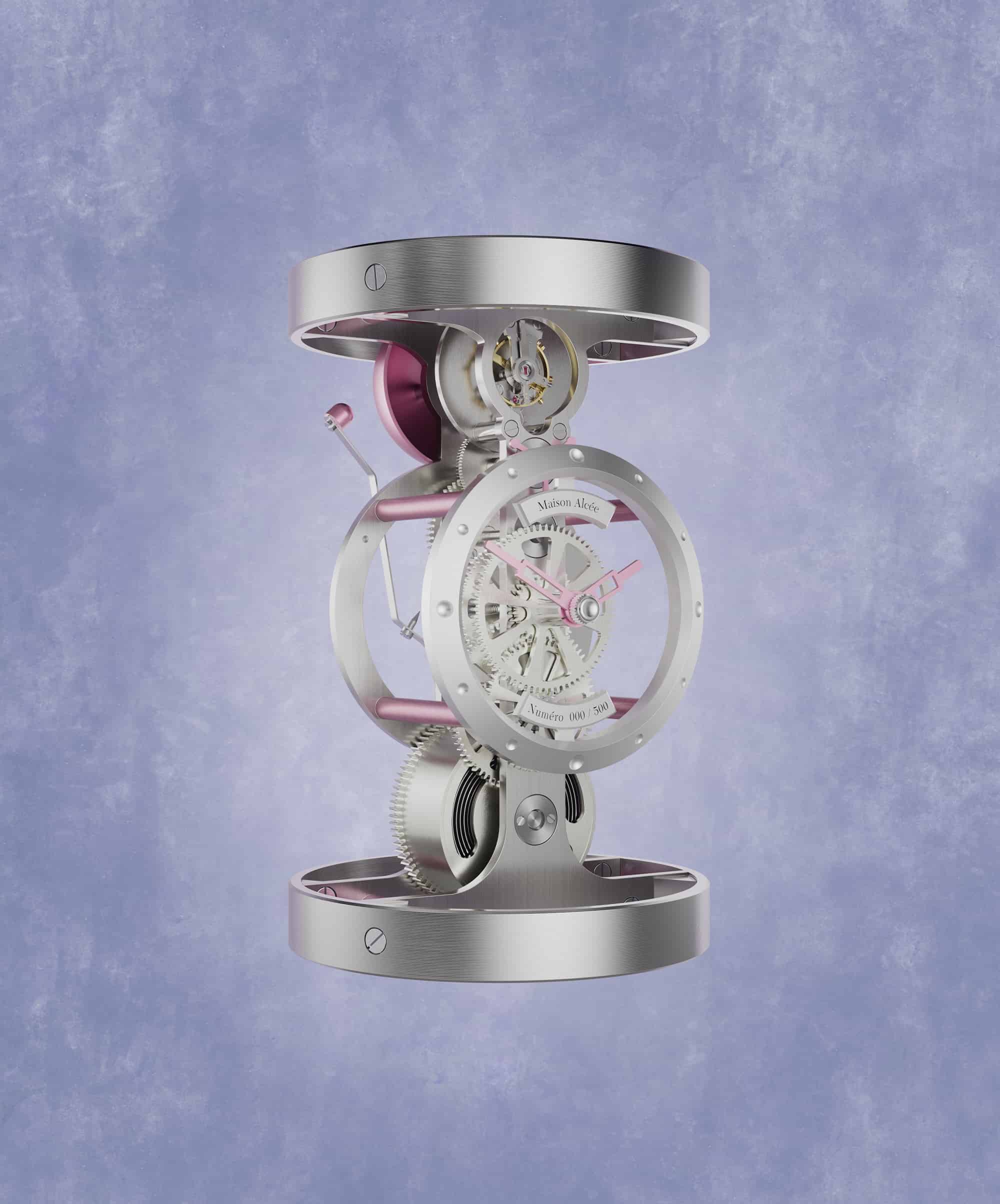
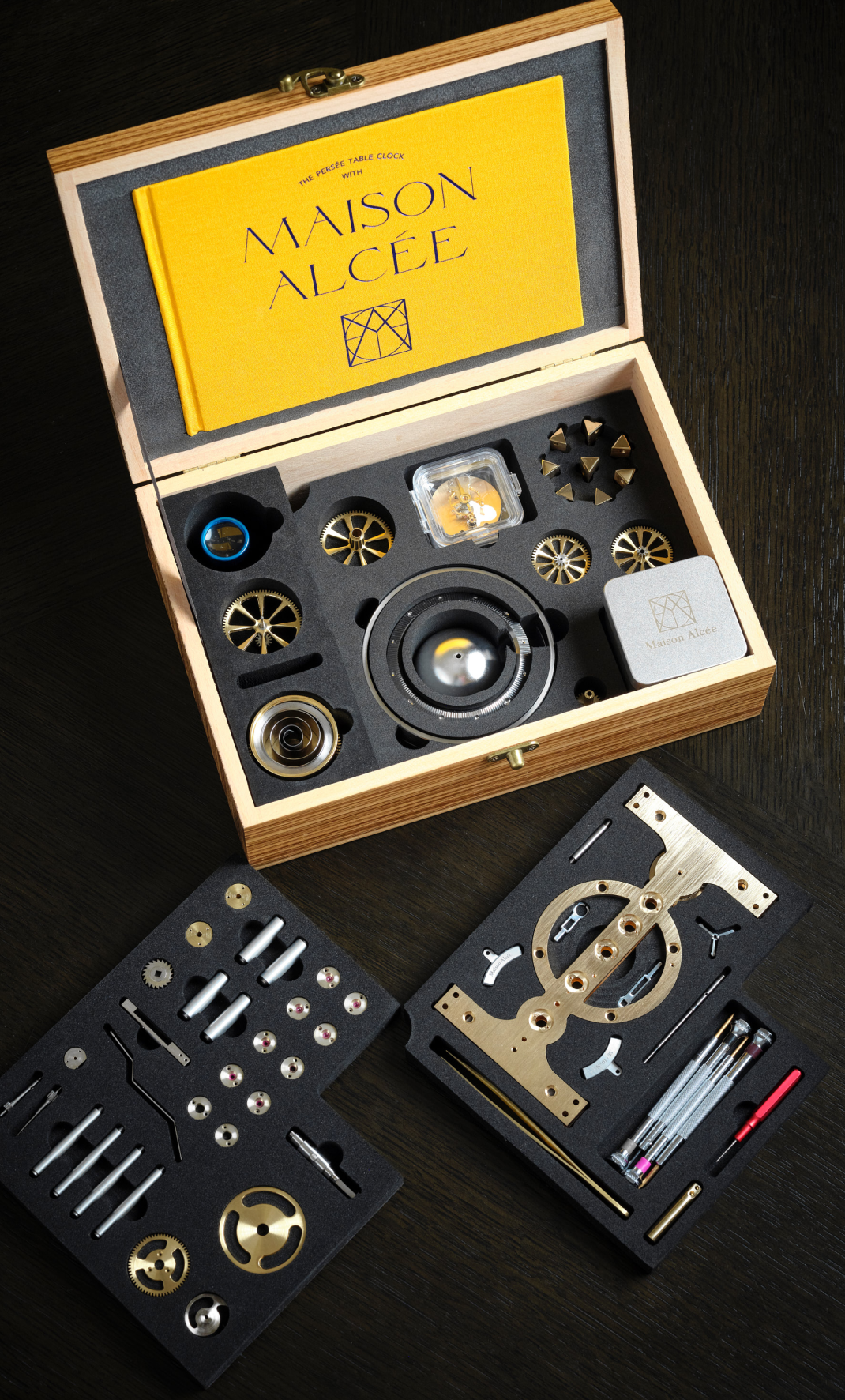
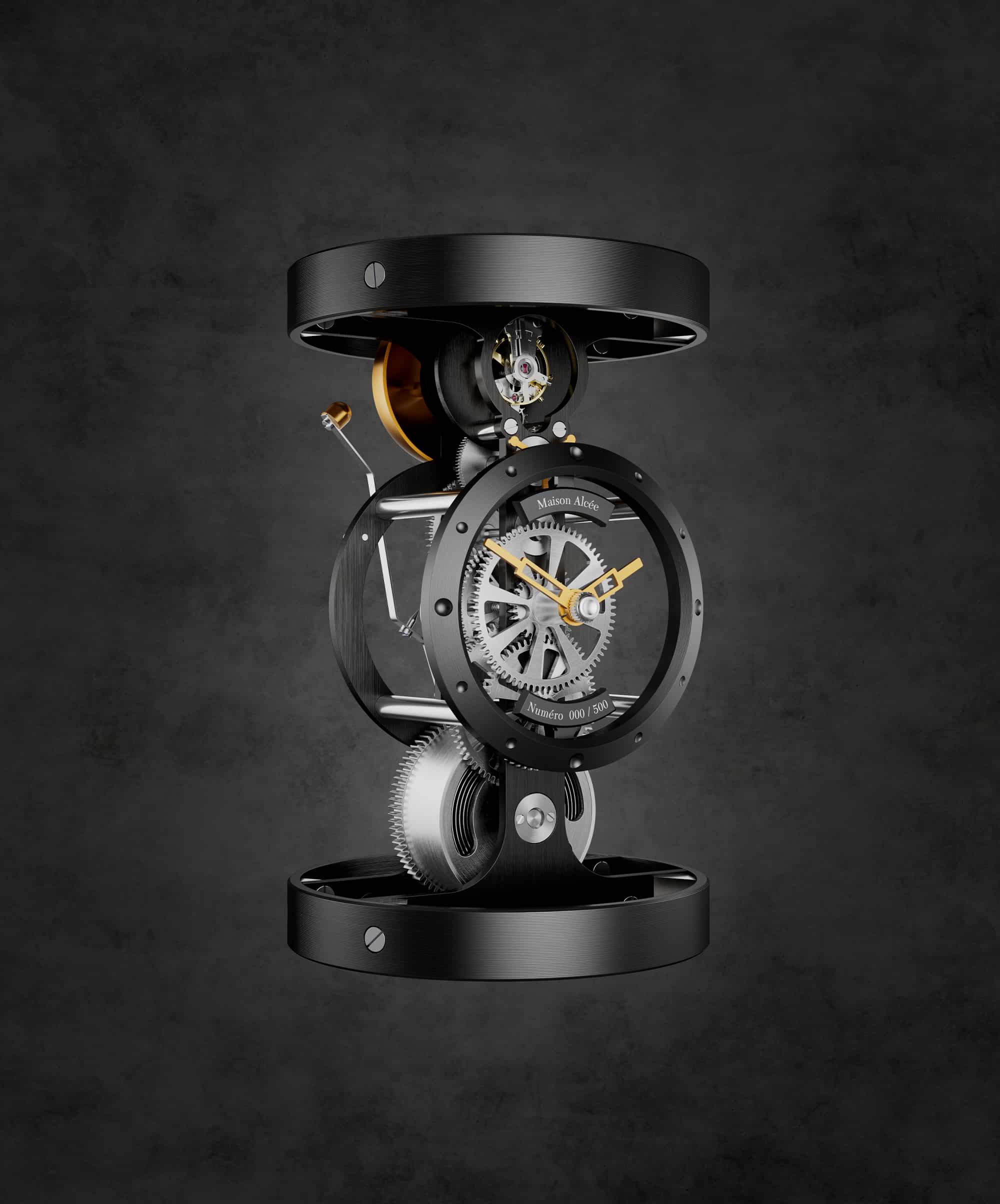
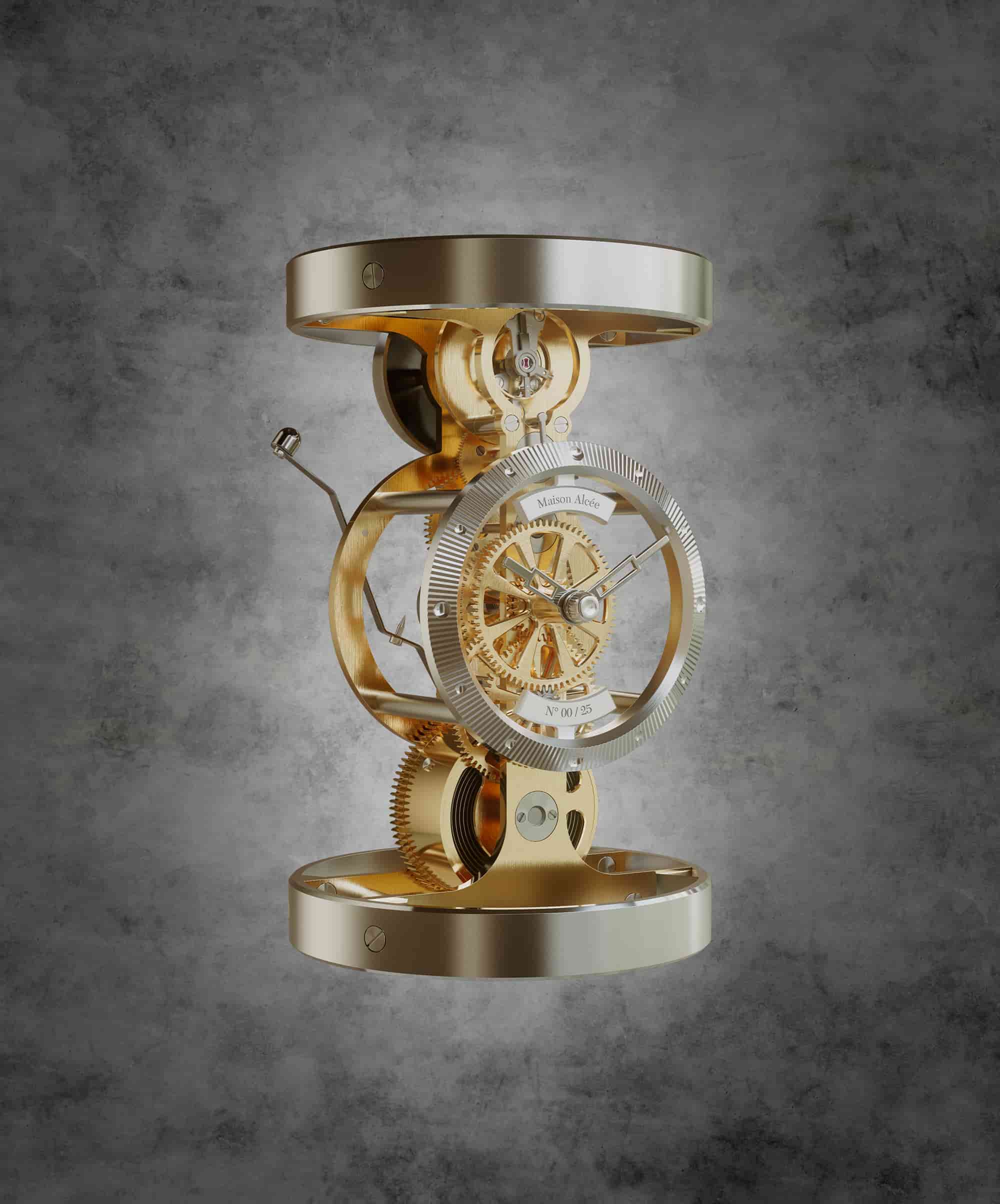
In the 21st century, the Persée desk clock enters as a worthy heir to this long tradition. Designed by Maison Alcée, this timepiece invites horology enthusiasts to step into the shoes of a watchmaker. They receive a box containing 233 components and the tools needed to assemble a magnificent mechanical timepiece.

© Maison Alcée

© Maison Alcée

The different types of pendulum clocks
Pendulum clocks, wall clocks, wristwatches… One might wonder how these types of clocks and timekeeping instruments actually work. In this article, we’ll focus on various types of pendulum clocks, each relying on different technologies to measure time. These technological differences affect not only the accuracy of the clocks, but also their aesthetic and daily use.
Let’s share in the wonder of how pendulum clocks have helped us master time across the centuries.
Mechanical pendulum clocks
Mechanical pendulum clocks use a system of weights or springs to store energy. This potential energy is gradually released to power the internal movement of the clock. These clocks are cherished for their traditional charm and artisanal craftsmanship. They require regular winding—typically once a week—which adds a ritualistic element to their use. Winding maintains the tension in the spring or resets the weight, ensuring the clock keeps going properly. Moreover, the steady tick-tock rhythm of mechanical clocks creates a soothing atmosphere, subtly reminding us of the value of time and the beauty of its passing—both in science and in life.

© 1001 pendules

© 1001pendules
Quartz pendulum clocks
Quartz pendulum clocks are significantly more accurate than mechanical clocks. They use a small quartz crystal that vibrates at a constant frequency when exposed to an electric current. This vibration, or frequency, is harnessed to measure time with remarkable precision. Unlike their mechanical counterparts, quartz clocks do not require regular winding. Instead, they are powered by batteries, which provide the necessary energy to keep the clock going. This makes them especially convenient for everyday use. Whether for home or office, their blend of functionality, potentialfor style, and reliable performance make them a preferred choice for many.
Atomic pendulum clocks
Atomic pendulum clocks represent the pinnacle of precision in horology. These clocks use the energy transitions of atoms to measure time. Thanks to this advanced technology, atomic clocks can remain accurate to the second over millions of years. They are essential in scientific laboratories, astronomical observatories, and are crucial for synchronizing telecommunication networks and satellite navigation systems. Although atomic clocks are primarily used in professional and scientific contexts, they symbolize the pinnacle of timekeeping technology and stand as a testament to the incredible precision humanity has achieved.

© Wikipédia
How a traditional pendulum clock works
To understand how a traditional clock works, it’s essential to look closely at its components and how they interact. Each component plays a crucial role in the proper functioning of the clock and the accuracy of time measurement by this remarkable instrument.
The escapement and the pendulum

© Fédération des écoles techniques
The escapement is a crucial component in the mechanism of the pendulum clock. It regulates the motion of the pendulum by delivering energy at regular intervals, ensuring a constant frequency of swings. This regularity allows time to be divided into equal intervals, which is essential for the accurate measurement of time. The pendulum and escapement work in harmony to maintain a steady rhythm, transforming stored energy into predictable motion. The choice of materials and the precision of assembling these gears are vital for ensuring the clock’s long-term going and reliability.
Energy transmission

© Page 71 du livre Maison Alcée
The energy stored in the weights or the spring is transmitted through a series of gears. These gear trains reduce the speed of rotation and increase the accuracy of the clock hand movements while extending the going reserve of the pendulum, just like in a watch movement. Each gear is carefully calibrated to ensure the energy is distributed evenly and continuously. This energy transmission is crucial to maintain the accurate display of time by the clock. The gears must be perfectly aligned and lubricated to minimize friction and prevent premature wear, thus guaranteeing smooth and uninterrupted energy flow.
The role of the weight or mainspring
The weight or the mainspring is essential for storing and redistributing the energy needed to power the pendulum. In weight-driven clocks, gravity slowly pulls the weight downward, gradually releasing the energy. This system is often used in large wall clocks and longcase clocks. In spring-driven clocks, the energy is stored by coiling the spring tightly, which then slowly unwinds to power the movement. This type of system is more common in mantel clocks and watches. Both systems have their advantages and disadvantages, but each requires regular maintenance to ensure optimal operation.

© Horloge industrielle
Regulation and time accuracy
The regulation of time in a pendulum depends on the precision of the adjustments to the balance wheel and the escapement. Proper adjustments allow for correcting small variations and maintaining consistent accuracy. Watchmakers use sophisticated measuring instruments to detect these variations and fine-tune the clock settings, ensuring optimal precision. Variations in temperature, humidity, and especially the position of the clock can affect its accuracy. That is why regular maintenance and precise adjustments are essential to sustain the pendulum’s optimal performance.
Essential components of a pendulum
Every component of a pendulum, especially those in its movement, plays a crucial role in its smooth operation. Understanding how a clock works involves grasping these components, each contributing to the beauty of this time measuring instrument.

© Maison Alcée

© 1001pendules
The dial and the hands
The dial displays the time and is equipped with hands, much like a wristwatch, indicating the hours, minutes, and sometimes seconds. The hands are driven by the internal mechanism of the pendulum, set into motion by a series of gears and pinions. Dial design can vary widely, from minimalist and modern to ornate and traditional styles. The readability of the dial and the precision of the hands are essential for proper use of the clock. Additionally, some pendulums include extra complications, such as moon phases or date indicators, offering both functional and aesthetic enhancements.
The movement
The movement is the mechanical heart of the pendulum clock. It includes the escapement, the balance wheel, the entire gear train, and all other components that ensure the proper operation of the whole mechanism. A mechanical movement can be extremely complex, involving hundreds of precisely adjusted parts working together to measure time accurately. Each component must be manufactured with extreme precision and carefully assembled to ensure optimal functioning. The movement is often housed in a protective case that shields it from dust and damage, while still allowing the movement to be observed in action through a glass panel or an opening in the case.

© Horlogerie Ancienne
The striking mechanism
Many pendulum clocks are equipped with a striking mechanism that announces the hours, quarter hours, or functions as a simple alarm. This addition to the movement brings a sonic dimension to the clock, marking the passage of time. The chime can vary in complexity, ranging from a simple hammer striking a bell to intricate melodies played by chime systems. The striking mechanism is synchronized with the main movement of the clock to ensure the sounds are emitted at the correct moments. Proper maintenance of the striking mechanism is essential to preserve the clarity and regularity of the sound, often requiring lubrication and regular adjustments using watchmaking tools.

© Maison Alcée
© Maison Alcée
How to maintain your clock?
Pendulum clocks demand care to maintain their function and beauty. Regular servicing—cleaning, lubrication, and calibration—ensures accuracy and longevity. Over time, dust accumulates, friction grows, and precision fades. Professional watchmakers, trained in time-honored techniques, revive these mechanisms. Their work preserves not just mechanics, but stories embedded in every gear and escapement. Signs of needed attention emerge subtly: irregular ticking, a halted pendulum, or a clock gaining or losing minutes daily. These signals aren’t mere malfunctions—they’re invitations to reconnect with craftsmanship.
Regular cleaning and maintenance
Regular cleaning of both the internal and external components of the pendulum clock helps remove dust and dirt that can affect its performance. No special tools are needed — a soft cloth can be used to clean the case and dial, taking care not to scratch delicate surfaces. The internal parts may require deeper cleaning, which should be performed by a professional watchmaker to avoid damaging sensitive mechanical parts. Additionally, lubrication of the gears and pivots is crucial to minimize wear and ensure smooth operation. Use oils specifically made for clocks to avoid residue and extend the life of the internal components.

© Maison Alcée
Common repairs and where to get them done
Some repairs, such as replacing worn-out parts or recalibrating the balance wheel, must be handled by a professional watchmaker. Qualified horologists have the expertise and the proper tools to diagnose and fix complex issues in pendulum clocks. It’s important to find a certified specialist to ensure high-quality repairs. Many watchmakers also offer restoration services, bringing antique clocks back to life by replacing worn components and repairing damaged movements with their craftsmanship and tools. Choosing a reputable watchmaker ensures your clock will receive proper care and continue to run optimally for many years.

© Maison Alcée
How to regulate a pendulum clock?
To regulate a pendulum clock, fine adjustments often need to be made to the balance wheel or the escapement. Always follow the manufacturer’s instructions to perform these adjustments correctly. In most cases, this involves changing the length of the pendulum or adjusting the tension of the escapement to correct time variations. For more precise tuning, it’s advisable to consult a professional watchmaker—especially if the clock continues to run too fast or too slow after initial adjustments. A professional regulation may involve detailed testing and repeated fine-tuning to ensure the clock maintains accurate and consistent timekeeping.
Why is my pendulum clock running fast or slow?
When wondering why a pendulum clock isn’t keeping time properly, identifying the cause can be tricky. Time variations can result from temperature changes, internal friction, or an unbalanced balance wheel. Pendulum clocks are sensitive to shifts in temperature, which can affect the expansion of materials and disrupt the oscillation of the balance. Likewise, dust and debris buildup in the gears can create extra friction and slow down the movement. An imbalanced pendulum can also lead to timekeeping inaccuracy. Regular maintenance and precise adjustments help reduce these variations. Watchmakers can use specialized equipment to measure the performance of the clock and make fine adjustments to improve its accuracy.

© Maison Alcée
Can you repair a pendulum clock yourself?
Some basic repairs, such as cleaning or winding, can be done by the owner. However, for more complex issues, it’s best to consult a professional watchmaker who has the necessary knowledge and tools for proper clock maintenance. Pendulum clocks are delicate and sophisticated devices, and improper handling can cause irreversible damage. Enthusiasts can learn to perform basic tasks like dust removal or mainspring winding, but should avoid disassembling internal components without proper training. If you still wish to repair your pendulum clock yourself, make sure to educate yourself and acquire the right horological tools to minimize the risk of damage. For complex repairs or timing issues, it’s strongly recommended to consult an experienced horologist who can diagnose and resolve the problem professionally.
Ecrit par Nicolas T.
-
The discovery of art objects

Rare and refined creations for the lovers of art and authenticity.
-
Understand the mechanism of a watch

Discover the mechanism of a movement and the mysteries it reveals…
-
Unique collectible items

Unique collectible items to enrich your cabinet of curiosities…
